



























































Veg Biryani – Aromatic, Flavor-Packed & Soulful One-Pot Meal
Aromatic and richly spiced, this Veg Biryani brings together fragrant basmati rice, fresh vegetables, yogurt, and traditional Indian spices in layered harmony. Perfect for a family dinner or festive meal, this vegetable biryani delivers the charm of a restaurant-style dum biryani with wholesome home-cooked goodness. A comfort meal that’s flavorful, colorful, and satisfying.
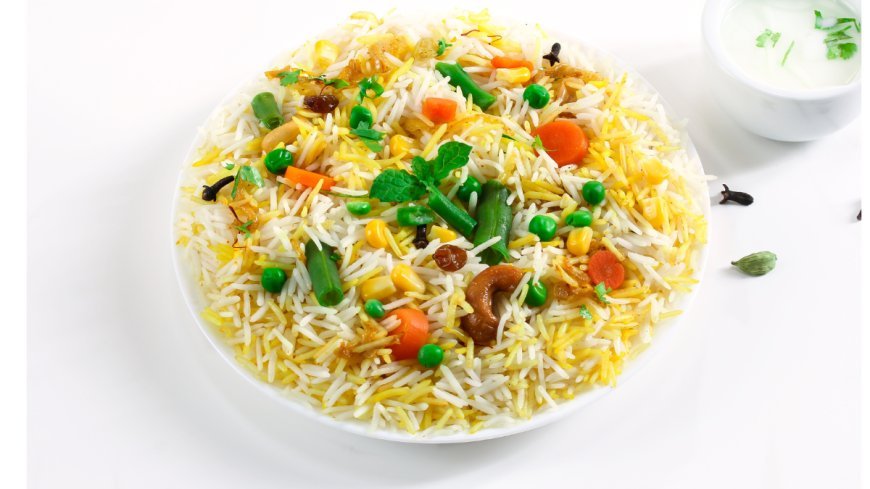
Vegetable Biryani is a beloved vegetarian twist on the classic rice-and-spice dish, combining long-grain basmati rice with a medley of mixed vegetables, yogurt or curd, aromatic whole and ground spices, herbs, and a finishing of saffron, ghee (or oil), and caramelized onions.
When cooked correctly — with rice par-boiled and then layered with vegetable gravy — the result is a fragrant, moist, and flavor-rich biryani where each grain of rice stays separate yet layered with aromatic masala and veggie goodness.
This dish works wonderfully for weeknight dinners, family lunches, or festive gatherings. Serve hot with raita, salad, or a side of pickle for a complete and satisfying meal.
Ingredients
- For the Rice Layer
- 1.5 to 2 cups long-grain basmati rice (soak 20–30 min)
- Whole spices: 3–4 green cardamoms, 2–3 cloves, 1 small cinnamon stick, 1 bay leaf, 1–2 star anise (optional)
- Salt, to taste
- Water, enough to cook rice up to ~70-80% (par-boil)
- 1–2 tbsp ghee or oil (optional, helps keep grains separate)
- For the Vegetable Gravy / Masala Layer
- 2 tbsp oil or ghee (or mix)
- 2 large onions, thinly sliced (some fried until golden for garnish / birista)
- 1 tbsp ginger-garlic paste
- Mixed vegetables (choose any combination): carrots, green beans, potatoes, peas, cauliflower, beans, mushrooms, etc. (about 2–3 cups chopped total)
- ½ to 1 cup yogurt / curd (helps bind masala and vegetables)
- Spice powders:
- 1 tsp red chilli powder (adjust to taste)
- ½ tsp turmeric powder (optional)
- 1 tsp garam masala or biryani masala powder
- Salt, to taste
- Fresh herbs: handful of mint leaves + coriander leaves, chopped
- Optional: a few strands of saffron soaked in warm milk (for aroma & color) and a drizzle of ghee or butter for richness / aroma.
- For Garnish / Finishing
- Fried onions (birista) — about ¼ to ½ cup
- Fresh coriander / mint leaves
- A splash of ghee or butter / a little oil
- Optional: nuts (cashews, almonds), raisins for a festive touch
Nutritional Information
- Nutrition will vary depending on vegetables used, amount of ghee/oil, and portion size. A rough estimate for a typical serving (1 cup cooked veg biryani with moderate oil/ghee & vegetables)::
- Calories: ~350–450 kcal
- Carbohydrates: ~6–8 g (from vegetables and yogurt)
- Fats: ~8–15 g (from oil / ghee)
- Fiber: Moderate — ~4–6 g (vegetables + some from rice)
- (Note: Because of vegetables and spices, veg biryani tends to be lighter than meat-based biryanis, though oil / ghee add to richness.):
Directions
How to Make Flavorful & Aromatic Veg Biryani at Home
Soak & Par-boil Rice
-
Rinse basmati rice thoroughly until water runs clear. Soak for 20–30 minutes.
-
Boil water with whole spices (cardamom, cloves, cinnamon, bay leaf, star anise), add salt, and cook rice until it’s about 70–80% done (slightly undercooked, grains still firm). Drain and keep aside.
-
Prepare Vegetable Masala
-
In a heavy-bottom pot or deep pan, heat oil (or ghee + oil). Sauté sliced onions until golden brown. Remove half for garnish (fried onions / birista).
-
Add ginger-garlic paste; sauté till raw smell disappears.
-
Add chopped mixed vegetables — carrots, beans, potato, peas, cauliflower, etc. Stir-fry for a few minutes until they begin to soften.
-
Add yogurt / curd and mix well. Then add red chili powder, turmeric (if using), garam masala (or biryani masala), salt. Mix gently to coat veggies with the masala. Cook for a couple of minutes.
-
Add chopped mint and coriander leaves; mix and turn off heat.
-
-
Layer Rice & Masala
-
In a heavy-bottom, thick pot (or a dutch pot), spread half of the vegetable-masala mixture as the bottom layer.
-
Spread half of the par-boiled rice evenly over this layer.
-
Sprinkle half of the fried onions (birista), a little chopped mint/coriander, a few drops of ghee (or butter/oil) and optional saffron-milk mixture (for aroma & color).
-
Repeat the layers: remaining vegetable masala → remaining rice → top with remaining fried onions, herbs, saffron-milk / ghee.
-
-
Dum Cook / Seal & Slow Cook
-
Seal the pot: cover with a tight-fitting lid; for better sealing you may place dough or heavy foil at the rim to trap steam (traditional dum biryani style).
-
Cook on a very low flame (or place pot on tawa / griddle with low heat under — to prevent bottom burning) for 20–25 minutes. Let the biryani steam (dum) — this helps the flavors meld, aromatics infuse, and rice finish cooking perfectly.
-
-
Rest & Fluff
-
Turn off heat; let the pot rest covered for 5–10 minutes before opening. This helps moisture distribute evenly and prevents rice from sticking.
-
Gently fluff the rice with a fork / spatula — mixing layers without breaking grains.
-
-
Serve Hot
-
Serve Veg Biryani hot, garnished with fresh coriander / mint. A side of raita (yogurt–cucumber), salad, or pickle pairs beautifully.
-
-
Rice tip: Always par-boil rice and drain completely before layering to avoid mushy biryani. Use good quality aged basmati for long, separate grains.
-
Vegetable options are flexible: Carrot, peas, beans, potatoes, cauliflower, beans — you can even add mushrooms, baby corn, or paneer for variation.
-
Yogurt / curd helps with moisture balance: It binds vegetables & spices and keeps the biryani moist yet not soggy.
-
Aroma boosters: Use whole spices (cardamom, cloves, star anise, cinnamon), fried onions (birista), saffron soaked in warm milk, a drizzle of ghee / butter — these give the biryani that “restaurant / dum-biryani” aroma and richness.
-
Gentle heat for dum: Always cook on low flame and rest after cooking. It helps rice cook evenly and flavors to meld properly without burning.
-
Leftovers: Store in refrigerator after cooling. Reheat with a splash of water and a cover to retain moisture; add fresh herbs for a fresh taste.
What's Your Reaction?
 Like
0
Like
0
 Dislike
0
Dislike
0
 Love
0
Love
0
 Funny
0
Funny
0
 Angry
0
Angry
0
 Sad
0
Sad
0
 Wow
0
Wow
0